 Facebook
 X
X
 Pinterest
 Copy Link
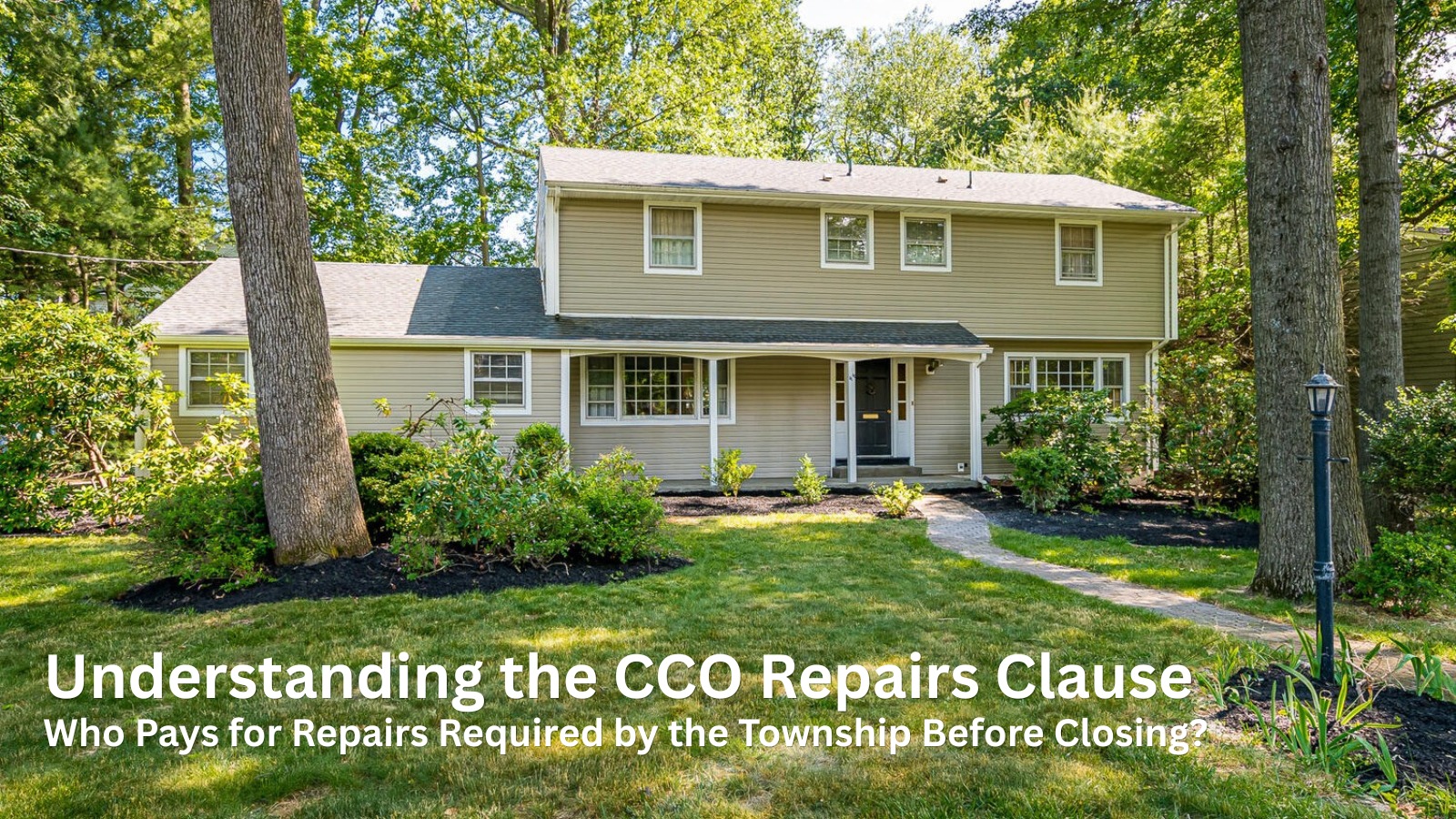
 That Little “However” Clause
Who pays for CCO repairs in a New Jersey home sale — and the blank space most people skip right past
There’s a single blank line in the Statewide New Jersey Realtors® Standard Form of Real Estate Sales Contract that almost nobody stops to read carefully — and it can quietly decide who pays for repairs you didn’t even know were coming.
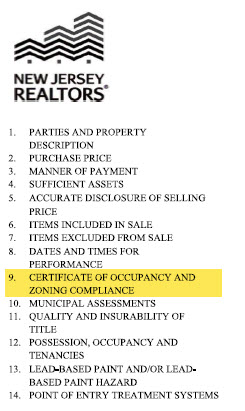
It lives in Paragraph 9, the Certificate of Occupancy section. This week it nearly blew up a deal I was working, so I want to walk through what it actually says, in plain English, because I think a lot of agents and buyers sign right over it.
What Paragraph 9 is really doing
Most New Jersey towns require a Certificate of Occupancy (a “CCO” or, in some municipalities, a Housing Code Letter) before a home can change hands. The standard contract starts exactly where you’d expect: the seller is the one who has to obtain that certificate, pay for the municipal inspection, and pay for any repairs the town requires to issue it. Getting the property cleared for transfer is the seller’s job. So far, no surprises.
Then comes the word that does all the work: “However.”
The “however” sentence caps how much the seller can be forced to spend on those required repairs. Once the cost climbs past a certain dollar figure, the seller is no longer locked in — they get the right to walk away and refund the buyer’s deposit. The buyer’s only counter-move is to agree to cover the overage themselves to keep the deal alive.
So the clause isn’t really about cancellation. Cancellation is the tool. The real purpose is cost certainty for the seller — a known ceiling on their repair exposure.
Here’s the part people miss
That dollar figure goes in a blank. And if the blank is left empty, the contract fills it in for you: the cap defaults to 1.5% of the purchase price.
On a $750,000 home, 1.5% is roughly $11,000. That’s the protection a buyer quietly gets when nobody touches the blank — the seller is on the hook for repairs up to about that amount before any escape hatch opens.
Now picture a listing agent asking you to write $500 into that blank instead.
That’s not a small edit. It drops the seller’s repair obligation from around $11,000 down to almost nothing — which means the seller can earn the right to terminate (or push costs onto the buyer) after spending next to zero. The number in that blank is the whole ballgame, and “left blank” is dramatically more buyer-friendly than most buyers realize.
The conversation that started this
This came up for me this week when a listing agent on the other side of a deal pushed hard to put a very low number in that blank — while also insisting the house was perfectly clean with no permit or repair issues.
And that’s the quiet tension worth noticing: if a house genuinely has nothing to repair, the cap never gets triggered, so the number shouldn’t matter to the seller at all. A hard fight for a tiny cap usually means someone wants cheap optionality — the right to walk or renegotiate — more than they’re letting on. Naming that, calmly, changes the whole tone of the negotiation.
The takeaway
You don’t have to become a contract scholar. You just have to read Paragraph 9 and look at the blank.
If it’s empty, the cap is 1.5% of the price by default.
If there’s a number in it, know whose side that number favors before anyone signs.
And remember: whatever goes into a signed contract is real. “We’ll fix it in attorney review” is a hope, not a guarantee — the other side has to agree to change it.
I’m a licensed Realtor, not an attorney, and this is not legal advice — it’s just one of those everyday contract details I think more buyers and agents should have on their radar. For your specific situation, lean on your real estate attorney during attorney review. That’s exactly what that window is for.
Have a Paragraph 9 story of your own? I’d love to hear it.
— Mary | Broker Associate, Coldwell Banker Realty | 908-930-4800 | mary.churchill@cbrealty.com