 Facebook
 X
X
 Pinterest
 Copy Link
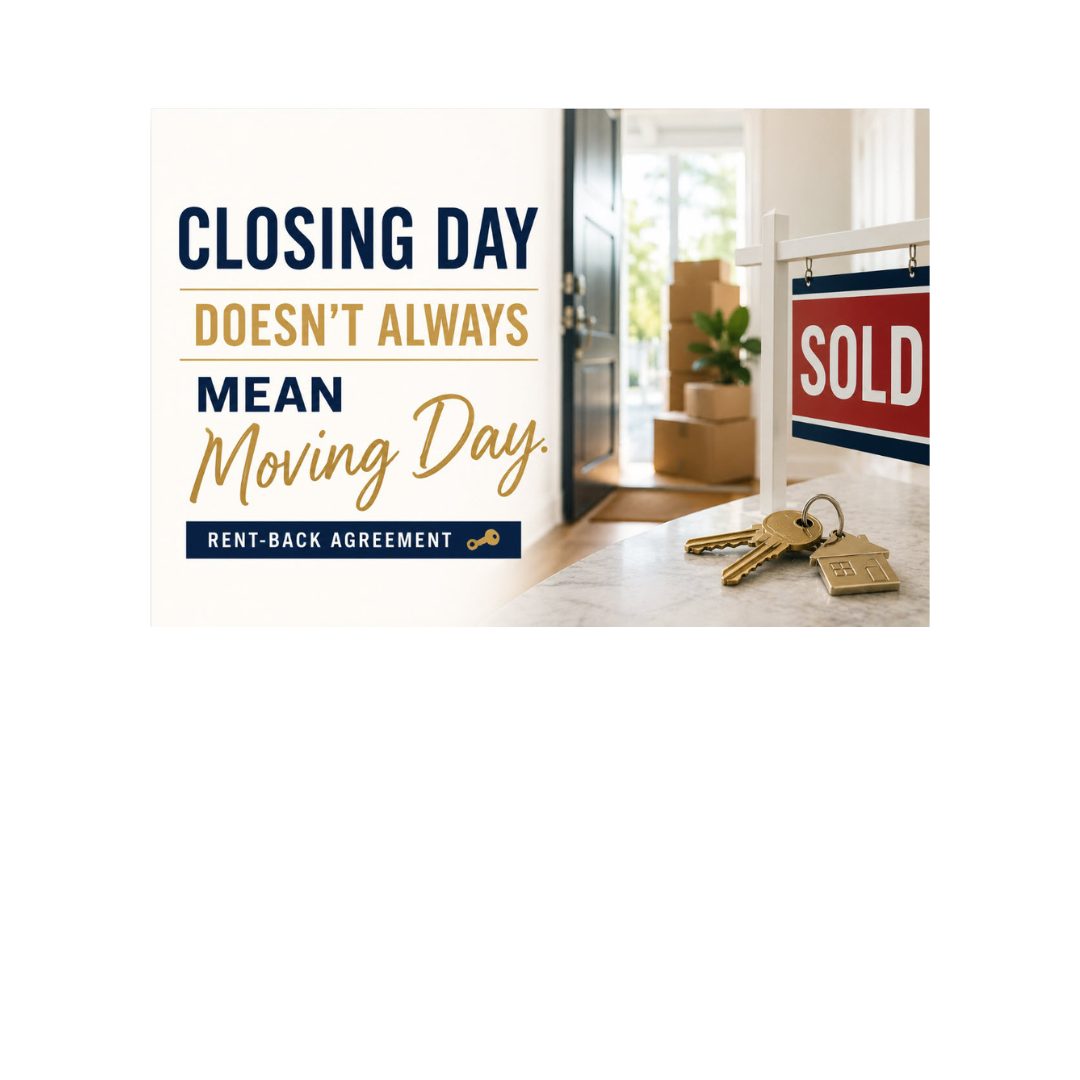
Closing day doesn’t always mean moving day.
Sometimes sellers have sold their homes… but can’t move into their new homes yet.
Clients usually say they’re afraid of being “homeless” or having to spend a ton of money on hotels & household storage.
So what can you do?
One solution is called a rent-back agreement (also known as a seller leaseback).
Here’s how it works: the buyer becomes the new owner at closing, but the seller stays in the home for a short, agreed-upon period—usually paying rent and moving out by a specific date.
Why would a buyer agree?
Because sometimes flexibility wins the deal.
If several offers are similar, giving the seller a little extra time can make your offer more attractive without increasing the purchase price.
Of course, the details matter.
A good rent-back agreement should clearly spell out:
- How long the seller may stay
- Whether rent will be paid
- Who pays utilities and maintenance
- What happens if the move-out date is missed
- Any security deposit or escrow holdback
The agreement should always be in writing. A handshake isn’t enough when ownership has already changed.
In New Jersey, the agreement is usually formalized by the attorneys during Attorney Review.
When handled properly, a rent-back can be an excellent solution for both buyer and seller. One gets a little breathing room. The other gets the home they want—with clear expectations from the start.
Every situation is different, and timing can make a big difference. If you’re planning to buy or sell, I’d be happy to discuss the options available and what makes the most sense for your situation.
Questions are always welcome.