 Facebook
 X
X
 Pinterest
 Copy Link
When homeowners think about basement water problems, they often picture a home in a flood zone, poor drainage around the foundation, or a major plumbing leak. But in many cases, the culprit is much simpler: a sump pump that stops working when the power goes out.
If your home has a sump pump, it’s worth taking a few minutes to understand how it works—and what happens when it doesn’t.
What Does a Sump Pump Do?
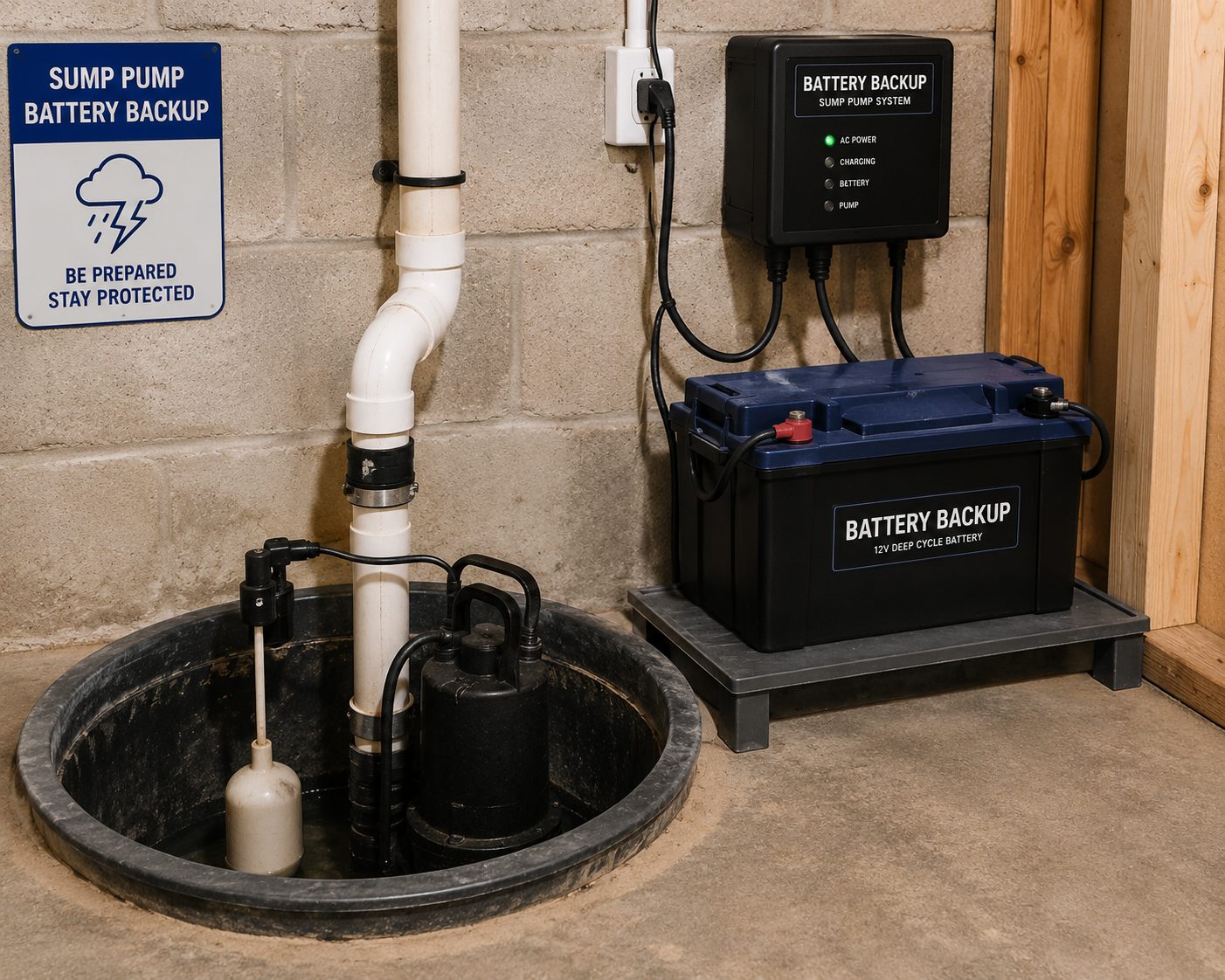
A sump pump is designed to remove water that collects in a sump pit, usually located in the basement. As groundwater rises around the foundation, water flows into the pit. When the water reaches a certain level, a float switch activates the pump, which sends the water away from the house through a discharge pipe.
For many homeowners, the sump pump is the first line of defense against basement water intrusion.
The Problem During Severe Storms
Here’s the challenge: the very storms that cause water levels to rise are often the same storms that cause power outages.
If the electricity goes out, a standard sump pump cannot operate. If water continues entering the sump pit, it may eventually overflow and allow water into the basement.
This can happen even in neighborhoods that are not located in flood zones.
Ways to Reduce the Risk
There are several ways homeowners can improve the reliability of their sump pump system.
Upgrade the Float Switch
The float switch is the device that tells the pump when to turn on and off. Some homeowners choose to upgrade to a higher-quality float switch that is more reliable and less prone to failure.
Install a Water Alarm
A water alarm or sump pump alarm can alert you if water levels become too high or if the pump stops working.
An alarm can be very helpful—but only if someone is home to hear it and take action.
Add a Battery Backup
Many homeowners choose to install a battery backup system. If the power goes out, the backup system automatically takes over and continues pumping water from the sump pit.
Most battery backup systems use a deep-cycle battery, similar in size and appearance to a large car battery. These batteries are designed to provide power over an extended period and are typically installed in a protective case next to the sump pit. Some newer systems use AGM or lithium batteries, which may require less maintenance but often come at a higher cost.
A battery backup provides protection even when no one is home to hear an alarm or start a generator. For many homeowners, it offers valuable peace of mind during major storms, vacations, or unexpected power outages.
It’s important to understand, however, that a battery backup is not a guarantee against flooding. If the power outage lasts longer than the battery’s capacity, if the battery has not been properly maintained, or if water enters the sump pit faster than the pump can remove it, water intrusion may still occur.
Even with those limitations, many homeowners consider a battery backup to be one of the most practical and cost-effective ways to reduce the risk of basement water damage during severe weather.
Consider a Generator
Some homeowners go a step further and use a portable or standby generator to keep critical systems operating during a power outage. Depending on the setup, a generator can provide power not only to the sump pump, but also to refrigerators, heating systems, and other essential household equipment.
Is a Battery Backup Worth It?
The answer depends on your home, your risk tolerance, and how frequently your sump pump operates.
If your basement rarely sees water and the pump almost never runs, a battery backup may not be a high priority.
On the other hand, if your sump pump runs regularly during heavy rain, a battery backup may be one of the most cost-effective ways to reduce the risk of water damage.
Many homeowners spend thousands of dollars finishing a basement but never consider what might happen if the power goes out during a major storm.
A Simple Checkup Before Storm Season
If your home has a sump pump, consider asking yourself a few questions:
Is the sump pump operating properly?
How old is the pump?
Does it have a backup power source?
Is there an alarm system?
Have the discharge lines been inspected recently?
A little preventative maintenance today may help avoid a much larger headache later.
Final Thoughts
As a real estate professional, I often see buyers become concerned when they learn that a home has experienced a past basement water issue. In many cases, the cause is not a chronic drainage problem or a defective foundation—it may simply be that the sump pump could not operate during a power outage.
Every home is different, and homeowners should consult qualified contractors regarding the best solution for their specific situation. However, understanding how your sump pump works, what happens when the power goes out, and what backup options are available can help you make informed decisions about protecting your home.
No system can completely eliminate the risk of water intrusion, but a well-maintained sump pump system with appropriate backup protection can significantly reduce it.
The next big storm may be months away—or it may arrive tomorrow. The best time to find out whether your sump pump is ready is before you need it.
Mary Churchill is a full-time Realtor serving buyers and sellers throughout Central New Jersey. If you have questions about a home’s basement, drainage, flood history, or other property conditions, feel free to reach out.